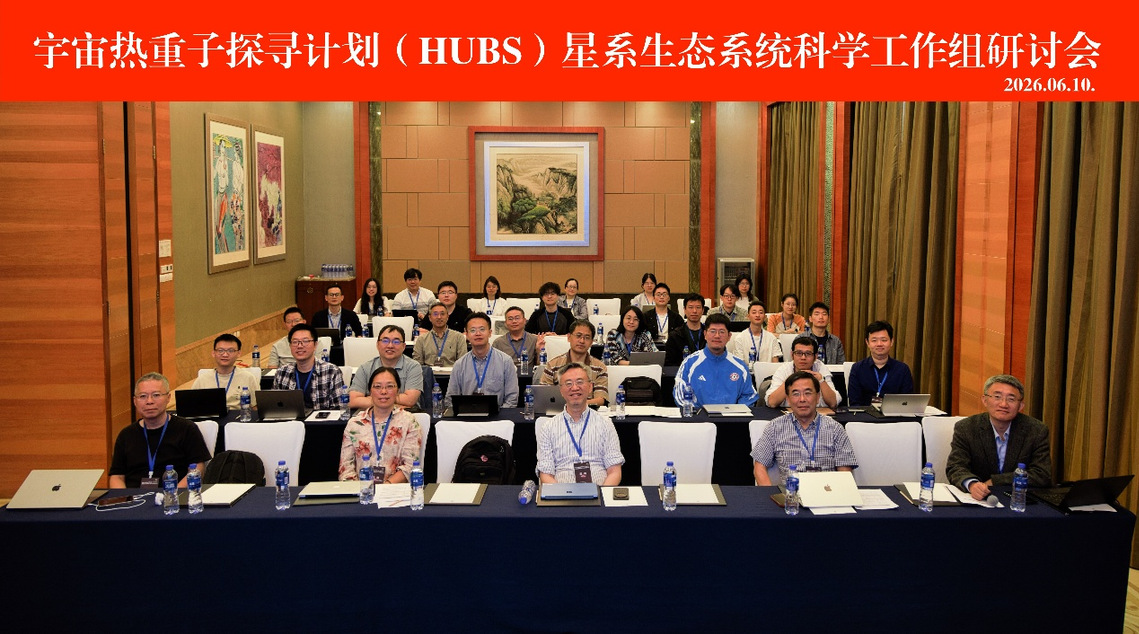
June 9–12, 2026 — The First Science Working Group Meeting of the Hot Universe Baryon Surveyor (HUBS) was successfully held in Guiyang City, Guizhou Province. The meeting was organized by the HUBS Science Team and brought together 35 experts and scholars from over ten top domestic universities and research institutions, including Tsinghua University, Peking University, Fudan University, Shanghai Jiao Tong University, University of Science and Technology of China, Nanjing University, National Astronomical Observatories of the Chinese Academy of Sciences, Purple Mountain Observatory, and Shanghai Astronomical Observatory. Centered on the core theme of the “Galactic Ecosystem,” the meeting featured 20 invited talks and intensive discussions, further deepening and expanding the scientific objectives of the HUBS project in the field of galaxy formation and evolution.
The HUBS satellite project is led by Chinese scientists, with Professor Wei Cui from Tsinghua University serving as the Principal Investigator. As a major space science mission addressing the frontiers of science and technology, HUBS relies on cutting-edge technologies such as independently developed superconducting X-ray microcalorimeters, and is the world’s first systematic survey mission targeting hot baryons in the universe. Its core scientific goals are to resolve two long-standing puzzles in astrophysics: the “missing baryon problem” and key physical processes in galaxy formation and evolution — namely, active galactic nucleus (AGN) and stellar feedback mechanisms.
Modern cosmological theories predict that a large fraction of baryonic matter in the universe remains “hidden” in the circumgalactic medium surrounding galaxies and in the hot gas within large-scale filamentary structures. However, this diffuse hot gas has extremely low density and emits primarily in the soft X-ray band, which has long been difficult to detect with existing observational facilities. HUBS aims to fill this observational gap by employing high-resolution, high-efficiency X-ray imaging spectroscopy to directly map, for the first time, the spatial distribution, temperature, density, and metal abundance of this hot gas.
HUBS closely aligns with the “X-ray Hot Baryon Detection” large mission in the first phase of the National Medium- and Long-Term Plan for Space Science Development (2024–2050). The project is currently at a critical stage of promoting its formal approval. HUBS has brought together over 100 experts and scholars from both China and abroad to form a world-class science team, with Professor Feng Yuan from Fudan University serving as the Head of the Science Team.
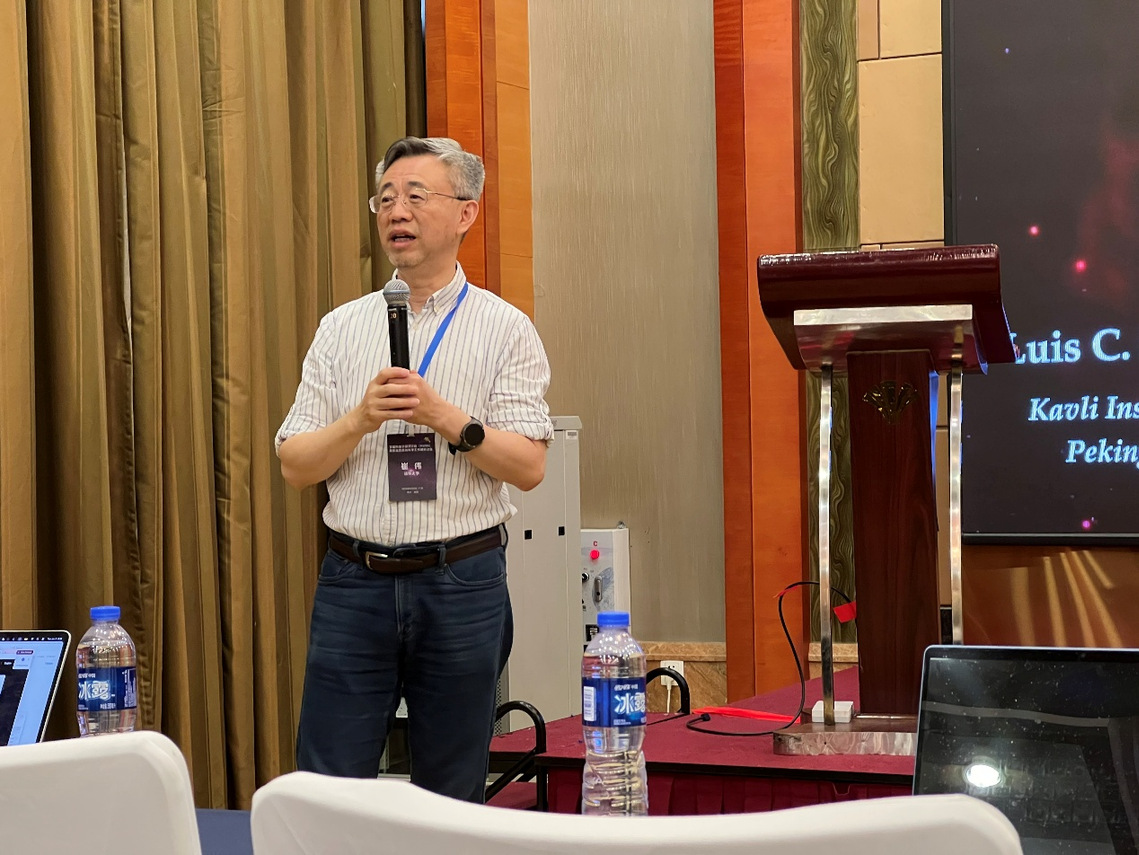
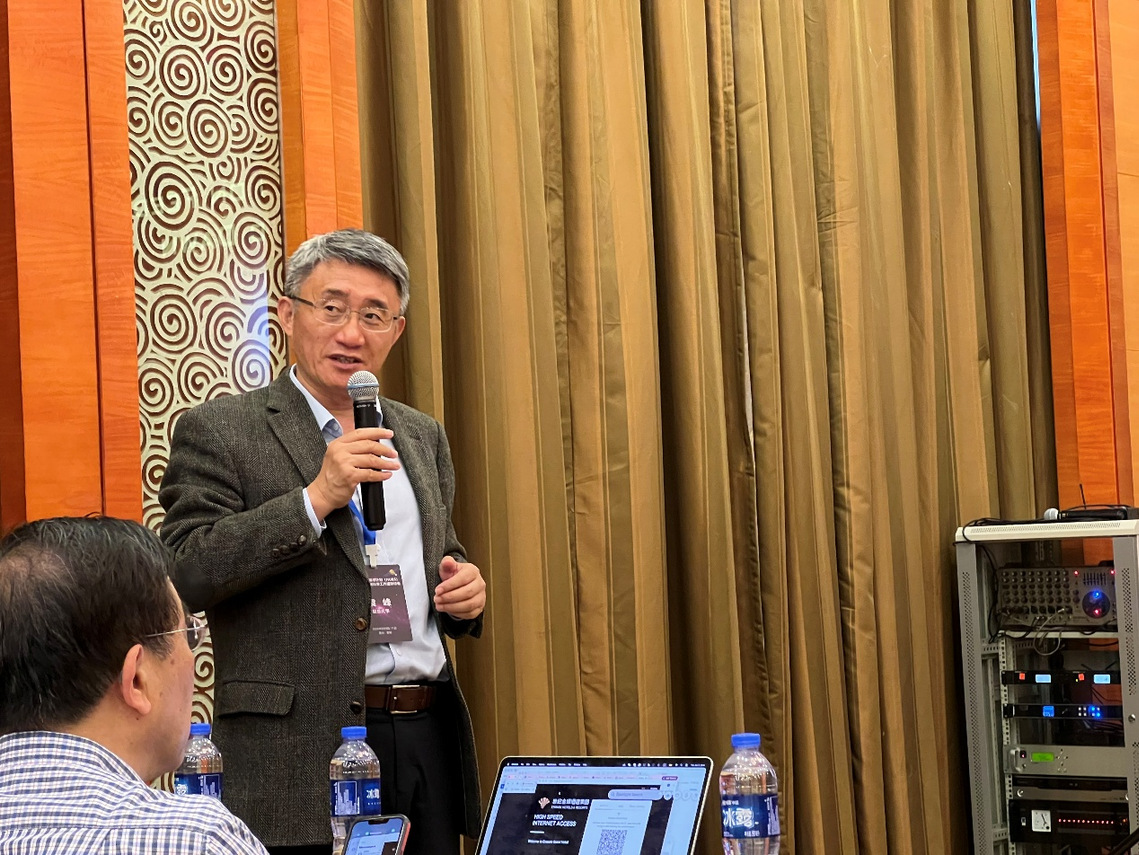
At the meeting, Professor Feng Yuan stated in his opening address that the cycling of matter and energy feedback in the galactic ecosystem are key to understanding the fate of galaxies, and HUBS will provide unprecedented observational constraints in the X-ray band. The experts engaged in in-depth discussions on frontier topics such as the properties of hot gas in the circumgalactic medium, observational signatures of AGN feedback, and energy injection from supernova remnants into the interstellar medium. Principal Investigator Professor Wei Cui emphasized in his concluding remarks that the meeting was highly focused, and the new ideas generated through these “collisions” will strongly advance HUBS’s scientific demonstration efforts, laying a solid scientific foundation for its successful approval.
This meeting in Guiyang not only refined HUBS’s detection strategy concerning the “Galactic Ecosystem” but also demonstrated the cohesion of China’s space science community in addressing major fundamental scientific questions. With continuous breakthroughs in key technologies, HUBS is expected to become another major national scientific instrument leading the frontier of international astronomical research.